
Headaches and Migraines Interrupting Your Life?
You’re trying to finish work, but the ache around your head is making concentration difficult. Your neck feels stiff, your shoulders are tight and you’re wondering whether another headache is about to take over your evening.
Or perhaps migraine means cancelling plans, finding a dark room and asking someone else to manage the school pickup.
Headaches can affect far more than your head. They can interrupt your work, sleep, family time and confidence in making plans.
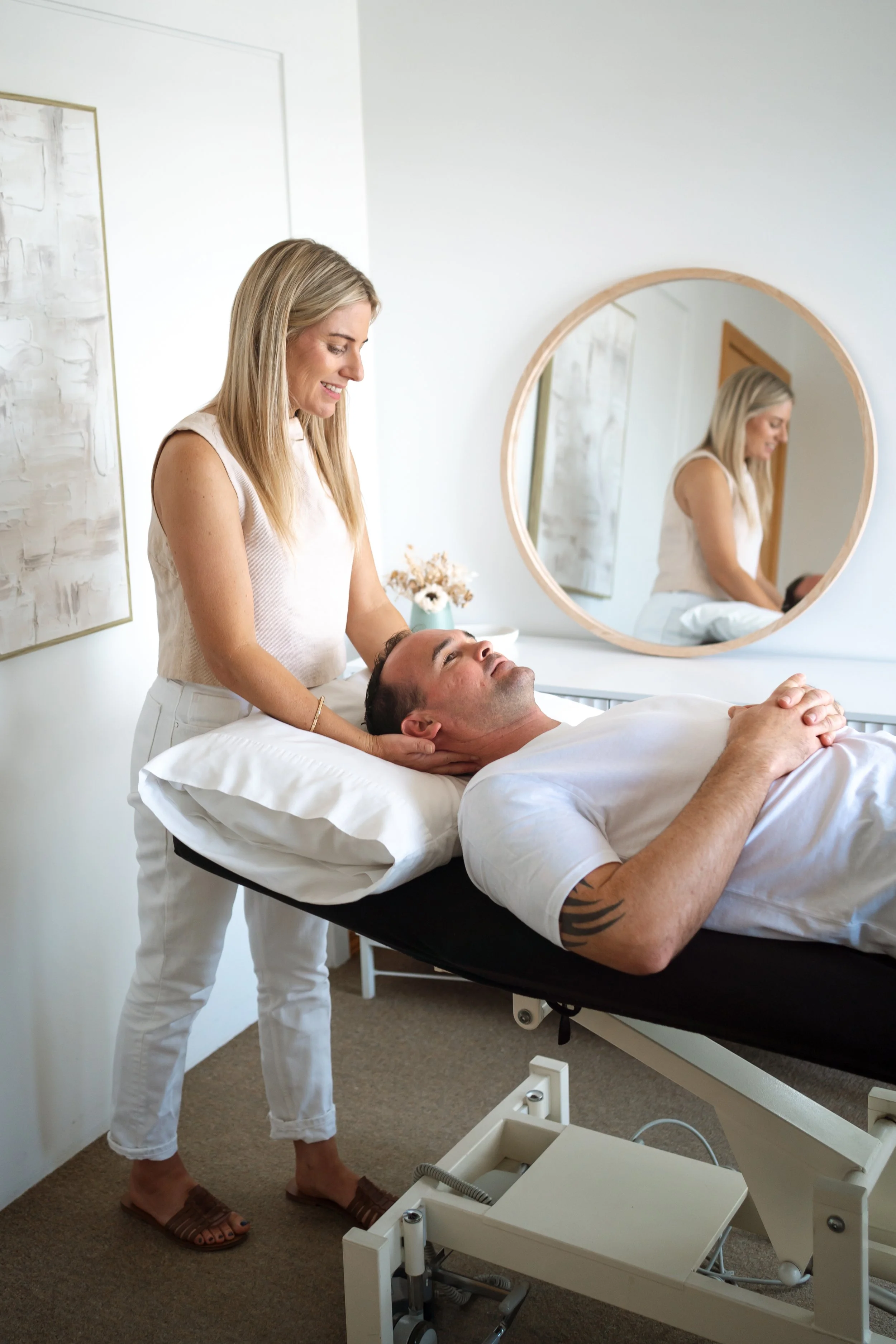
I’m Sarah Boughtwood, a Master’s-qualified osteopath in Milford, Auckland, with over 10 years’ clinical experience. I’ll take your symptoms seriously, assess whether your neck or surrounding muscles may be contributing and discuss appropriate care or referral.
Book an appointment with Sarah
ACC registered · No referral required · Free onsite parking
“I Can Get Through the Day, but It Takes Everything”
Not every headache sends you to bed. Sometimes you keep going, but everything feels harder.
You might recognise:
Pressure around your forehead during the working day.
An ache that seems to start at the base of your skull.
Head pain alongside a stiff or uncomfortable neck.
Difficulty concentrating during meetings or reading.
Having less patience or energy for your family.
Avoiding exercise or social plans because you feel unwell.
Worrying about when the next migraine attack will happen.
You deserve time to explain this impact—not just answer where it hurts.
At your appointment, I’ll ask what your headaches stop you doing and what you most want help with.
Book your appointment to discuss your symptoms
Headache or Migraine: Why the Difference Matters
Different headache conditions require different approaches. Having neck tension doesn’t automatically mean your headache starts in your neck.
Tension-type headaches
These often feel like pressing or tightening pain around the head. Despite the name, they shouldn’t automatically be attributed to tight muscles or stress.
Neck-related headaches
Sometimes called cervicogenic headaches, these arise from a problem in the neck. Assessment helps determine whether this pattern is likely and whether musculoskeletal care is appropriate.
Migraine
Migraine is a neurological condition, rather than simply a severe tension headache. Attacks may involve throbbing pain, nausea and sensitivity to light or sound. Some people experience aura, such as visual disturbances.
Neck discomfort can accompany migraine, but that does not prove the neck is causing it. An accurate diagnosis helps guide treatment.
If your headaches are new, changing or haven’t been medically assessed, we may discuss seeing your GP before or alongside osteopathic care.
How I Approach Your Appointment
First, we look at the pattern
I’ll ask when your headaches began, how often they happen, how long they last and what other symptoms occur.
We’ll discuss your health history, any previous diagnosis, medicines you use and how your symptoms affect everyday life.
Then, we assess what is relevant
Where appropriate, I’ll examine your neck movement and surrounding muscles and joints, and carry out relevant checks.
The aim is to understand whether there is a musculoskeletal problem we can address, while recognising symptoms that need medical assessment.
We discuss your options together
I’ll explain what I find, any uncertainty and whether osteopathic care is suitable. If another clinician’s input is needed, we’ll discuss that clearly.
You don’t need to arrive knowing which type of headache you have.
Book your headache assessment with Sarah
Where Osteopathic Care May Fit
If your assessment identifies a neck-related problem, care may include hands-on techniques, exercises and practical advice tailored to you.
For someone living with migraine, addressing associated neck pain or stiffness may be one part of their wider care. Osteopathy is not a cure for migraine and should not replace medical diagnosis or migraine-specific treatment.
Your GP can discuss medicines for attacks and preventive treatment where appropriate. We can work alongside that care, with clear goals for the symptoms being addressed.
Your comfort matters throughout. Neck manipulation is not required, and any proposed technique will be explained before you decide whether to proceed.
Book an appointment to explore suitable care
How osteopathic treatment may help
If neck pain, stiffness or restricted movement is contributing to your headaches, osteopathic care may offer a practical way forward. I’ll assess your symptoms and tailor care to you, using appropriate hands-on treatment, exercises and advice to address the neck-related problems we identify. You’ll leave with a clearer understanding of your symptoms and a plan focused on what matters to you—whether that’s concentrating at work, sleeping comfortably or enjoying family time. For migraine, treatment can address associated neck discomfort alongside your medical care; it does not replace migraine-specific treatment.
Book an appointment with Sarah to explore what may help your headaches
A Headache Diary Can Help You Explain What’s Happening
When headaches happen regularly, it can be difficult to remember the details at an appointment.
Consider recording:
When each headache starts and how long it lasts.
How it feels and how severe it is.
Any nausea, light sensitivity or other symptoms.
Medicines taken and whether they helped.
Possible patterns, including menstrual timing.
You don’t need to identify a trigger for every attack. The diary is a tool for understanding your symptoms, not another task to get perfectly right.
If you’re frequently relying on headache medicines, discuss this with your GP or pharmacist. Some medicines can contribute to medication-overuse headache when used too often. Don’t stop prescribed treatment without advice.
When a Headache Needs Urgent Medical Attention
Seek emergency help for a headache that is sudden and extremely severe, or occurs with new weakness, difficulty speaking, confusion, loss of vision, seizure, or fever with a stiff neck.
New neurological symptoms should not be assumed to be migraine aura. Seek urgent medical advice for a new or worsening headache after a head injury, or a new severe headache during pregnancy or after birth.
These situations need medical assessment rather than waiting for an osteopathy appointment.
Your Appointment in Milford, North Shore Auckland
My clinic is at Milford Health Clinic, 50 East Coast Road, Milford, with free onsite parking.
I welcome general patients alongside those seeking pregnancy and postpartum care. Babies, children and support people are welcome to accompany you.
You can bring previous reports, a medication list or your headache diary if you have them.
Book your appointment online
Frequently Asked Questions
Do I need a referral?
No referral is required to book. However, some headache symptoms need medical assessment first, and I’ll recommend this where appropriate.
Can you help if I already have a migraine diagnosis?
We can assess associated neck pain or stiffness and discuss whether musculoskeletal care has a useful role alongside your migraine management. We won’t assume your neck is the cause of your migraine.
Will I need my neck “cracked”?
No. There are other approaches, including gentle joint movement, soft tissue techniques, exercises and advice. Your preferences and informed consent guide any treatment.
Can I use ACC?
ACC appointments are available for eligible injuries. Headaches or migraine alone do not automatically qualify for cover. Contact me if you’re unsure which appointment to choose.
How many appointments will I need?
This depends on the findings and the symptoms we are addressing. We’ll agree on goals, review your response and reconsider the plan if care isn’t helping.
Let’s Start With Understanding Your Symptoms
Whether you’re missing family time, struggling through work or dealing with neck discomfort alongside migraine, your experience deserves to be heard.
We’ll take time to understand what’s happening, assess whether osteopathic care is appropriate and discuss your next steps.
