
Hip Pain: Why Does My Hip Hurt When Walking, Sleeping or Getting Out of the Car?
Is hip pain starting to interfere with activities you used to do without thinking?
Perhaps you can't lie comfortably on your side at night. Maybe getting out of the car causes a sharp pain through your groin, or your hip aches after walking around the shops. You might notice discomfort when putting on your shoes, standing up after sitting, climbing stairs or trying to return to running. Or perhaps you've had a persistent ache around the outside of your hip for months and are wondering why it won't settle. Hip pain is common, but it doesn't mean you have to simply put up with it. Whether your symptoms started after an injury, developed gradually or seem to have appeared for no obvious reason, understanding what may be contributing to your pain can help you find appropriate treatment and relief.
Where Does Your Hip Hurt?
One of the first things I ask patients is where they feel their hip pain. That's because the location of your discomfort can provide useful clues about which structures may be involved.
Pain on the Outside of Your Hip
Do you experience aching or tenderness around the bony area on the outside of your hip? Perhaps lying on that side is uncomfortable, or your hip aches after walking or standing for long periods. Outer hip pain is commonly associated with greater trochanteric pain syndrome (GTPS), which often involves the gluteal tendons.
You might notice:
Pain lying on your affected side
Aching around the outside of your hip
Discomfort walking uphill or climbing stairs
Pain standing on one leg
Tenderness when pressing on the outside of your hip
Pain when getting in and out of the car
This type of hip pain is sometimes called hip bursitis, although the gluteal tendons are often involved.
Pain in Your Groin or Front of Your Hip
A deep ache or sharp pain through your groin may be associated with structures within the hip joint or surrounding muscles and tendons.
You might experience:
Pain when lifting your knee towards your chest
Discomfort getting out of the car
Pain putting on socks or shoes
Catching or pinching sensations in the front of your hip
Stiffness after sitting
Pain when squatting or lunging
Groin pain can occur with conditions such as hip osteoarthritis, hip flexor-related pain, femoroacetabular impingement or labral problems. However, pain location alone doesn't confirm a diagnosis.
Pain in Your Buttock or Back of Your Hip
Sometimes hip pain is felt deep within your buttock or towards the back of your pelvis. You might notice aching after sitting, discomfort when walking or pain that seems to travel towards your thigh. Symptoms in this area can sometimes originate from your hip, gluteal muscles, sacroiliac region or lower back.
Hip Pain Travelling Down Your Leg
Hip-related pain can sometimes spread into your thigh or towards your knee. However, pain accompanied by tingling, numbness or weakness may suggest nerve involvement, sometimes originating from your lower back.Not all pain around your hip actually comes from the hip joint, which is why a thorough assessment can be helpful.
Common Causes of Hip Pain
There are several conditions and injuries that can contribute to hip discomfort.
Gluteal Tendinopathy and Greater Trochanteric Pain Syndrome
This is a common cause of pain around the outside of the hip, particularly in middle-aged and older adults. The gluteal tendons help stabilise your pelvis when walking, climbing stairs and standing on one leg. When these tendons become sensitive, you may notice aching or sharp pain during everyday activities. One of the most common complaints is hip pain when sleeping on your side. You might find yourself constantly changing position during the night because neither side feels comfortable.
Hip Osteoarthritis
Hip osteoarthritis becomes more common as we get older. It can cause aching, stiffness and reduced movement, often felt around the groin, thigh or buttock.
You may notice difficulty:
Getting in and out of the car
Putting on socks and shoes
Walking longer distances
Climbing stairs
Getting up from a low chair
Crossing your legs
Although osteoarthritis involves changes within the joint, it doesn't automatically mean you need to stop being active. Appropriate strengthening, movement and activity management can help many people manage their symptoms.
Hip Flexor Strains and Tendon Pain
Your hip flexor muscles help lift your leg towards your body. They work during walking, running, climbing stairs and many sporting activities. Hip flexor pain may develop after sprinting, kicking, repetitive exercise or a sudden increase in activity. You might notice discomfort at the front of your hip when lifting your knee, running uphill or getting out of a car.
Hip Impingement (Femoroacetabular Impingement)
Hip impingement, or FAI, describes certain hip joint shapes that can contribute to contact between the bones during particular movements. Not everyone with these anatomical features experiences pain.
When symptomatic, FAI may cause:
Deep groin pain
Pinching when squatting
Discomfort sitting for long periods
Pain bringing your knee towards your chest
Symptoms during twisting or pivoting sports
Hip Labral Tears
The labrum is a ring of cartilage around the edge of your hip socket. A labral tear may be associated with groin pain, catching, clicking or discomfort during twisting movements. However, labral tears can also be found in people without hip pain. An assessment helps determine whether your symptoms are likely to be related to the hip joint and whether further investigation is needed.
Hip Pain From Running or Sport
Hip pain can affect runners, cyclists, gym-goers, footballers, dancers and other active people. Symptoms may develop following an increase in training intensity, repetitive loading or a sudden injury. Common problems include muscle strains, tendon-related pain and hip joint irritation. In some cases, persistent groin or hip pain during running may indicate a bone stress injury, which requires medical assessment.
Why Does My Hip Hurt During Everyday Activities?
Sometimes the most frustrating part of hip pain isn't the pain itself — it's how many ordinary movements become uncomfortable.
Hip Pain When Sleeping on Your Side
Does your hip ache when you lie on it? Perhaps you wake during the night with a deep, throbbing pain around the outside of your hip. This is particularly common with gluteal tendinopathy and greater trochanteric pain syndrome. You may find yourself changing sides repeatedly or struggling to find a comfortable sleeping position.
Hip Pain Getting In and Out of the Car
Getting into a car requires your hip to bend and rotate. If your hip joint or surrounding tissues are sensitive, this movement can cause a sharp pinch through your groin or an ache around the outside of your hip. You might notice yourself moving both legs together or using your hands to help lift your leg into the car.
Hip Pain When Walking
Perhaps your hip starts aching after walking a certain distance. You might notice discomfort around your groin, outer hip or buttock. Walking places repeated demands on your hip muscles, tendons and joints. If these structures are sensitive, symptoms may increase as you continue walking.
Hip Pain When Sitting
Do you feel stiff or uncomfortable after sitting at your desk, driving or watching television? Some hip conditions are aggravated by prolonged hip flexion, particularly when sitting in low chairs. You may find yourself shifting position regularly or needing a few steps to loosen up when standing.
Hip Pain When Getting Dressed
Putting on pants, socks or shoes requires your hip to bend, rotate and sometimes balance on one leg. If your hip is stiff or painful, getting dressed can become surprisingly difficult.
Hip Pain When Exercising
Squats, lunges, running, cycling and weight training all place different demands on your hips. You might notice pinching at the front of your hip when squatting, aching around the outside of your hip after running or discomfort when lifting your knee. Hip pain doesn't always mean you need to stop exercising completely. Often, modifying your training and gradually rebuilding strength can help.
What Can I Do to Relieve Hip Pain?
If your hip is sore, there are several practical strategies that may help.
1. Keep Moving Within Comfortable Limits
Gentle walking and regular movement can help maintain mobility. Avoid prolonged complete rest unless you've been advised to protect your hip following an injury.
2. Modify Activities That Aggravate Your Pain
If long walks, hills or particular gym exercises aggravate your hip, consider temporarily reducing the duration, intensity or range of movement.
3. Adjust Your Sleeping Position
If you experience outer hip pain when lying on your side, try sleeping on your back with a pillow under your knees. Alternatively, lie on your less painful side with a thick pillow between your knees to help keep your top leg supported. Avoid positions that place sustained pressure on the painful outer hip.
4. Avoid Prolonged Hip Compression
For some people with gluteal tendinopathy, crossing your legs or standing with your weight resting on one hip can aggravate symptoms. Changing these habits may help reduce discomfort.
5. Gradually Strengthen Your Hip Muscles
Strengthening your gluteal muscles and other muscles around your hip can be an important part of recovery. The most appropriate exercises depend on your condition, symptoms and current abilities.
6. Try Heat or Cold for Temporary Relief
A warm shower or heat pack may help with stiffness and muscle discomfort. Some people prefer a cold pack after an injury or when the area feels particularly irritated.
7. Seek Advice if Your Pain Persists
If hip pain is affecting your sleep, walking, work or exercise, an assessment can help identify appropriate treatment and management options. You don't have to wait until hip pain is stopping you from doing everything before asking for help.
Book a Hip Pain Appointment with Sarah
Is Hip Pain Something I Should Worry About?
Most hip pain isn't caused by a serious medical condition, and many common hip problems improve with appropriate management. However, some symptoms require medical assessment.
Seek urgent medical attention if you experience:
Severe hip pain following a fall or accident
Inability to stand or bear weight
A visibly deformed leg or hip
A hot, swollen joint accompanied by fever
Sudden severe hip pain with significant difficulty moving
Persistent hip or groin pain during running, particularly if it's worsening or causing a limp, should be assessed to exclude a bone stress injury. Hip pain in children deserves particular attention. A child who develops a limp, hip or knee pain, or refuses to bear weight should be medically assessed. Sudden hip pain with fever or inability to walk requires emergency assessment.
How Can Osteopathic Treatment Help Hip Pain?
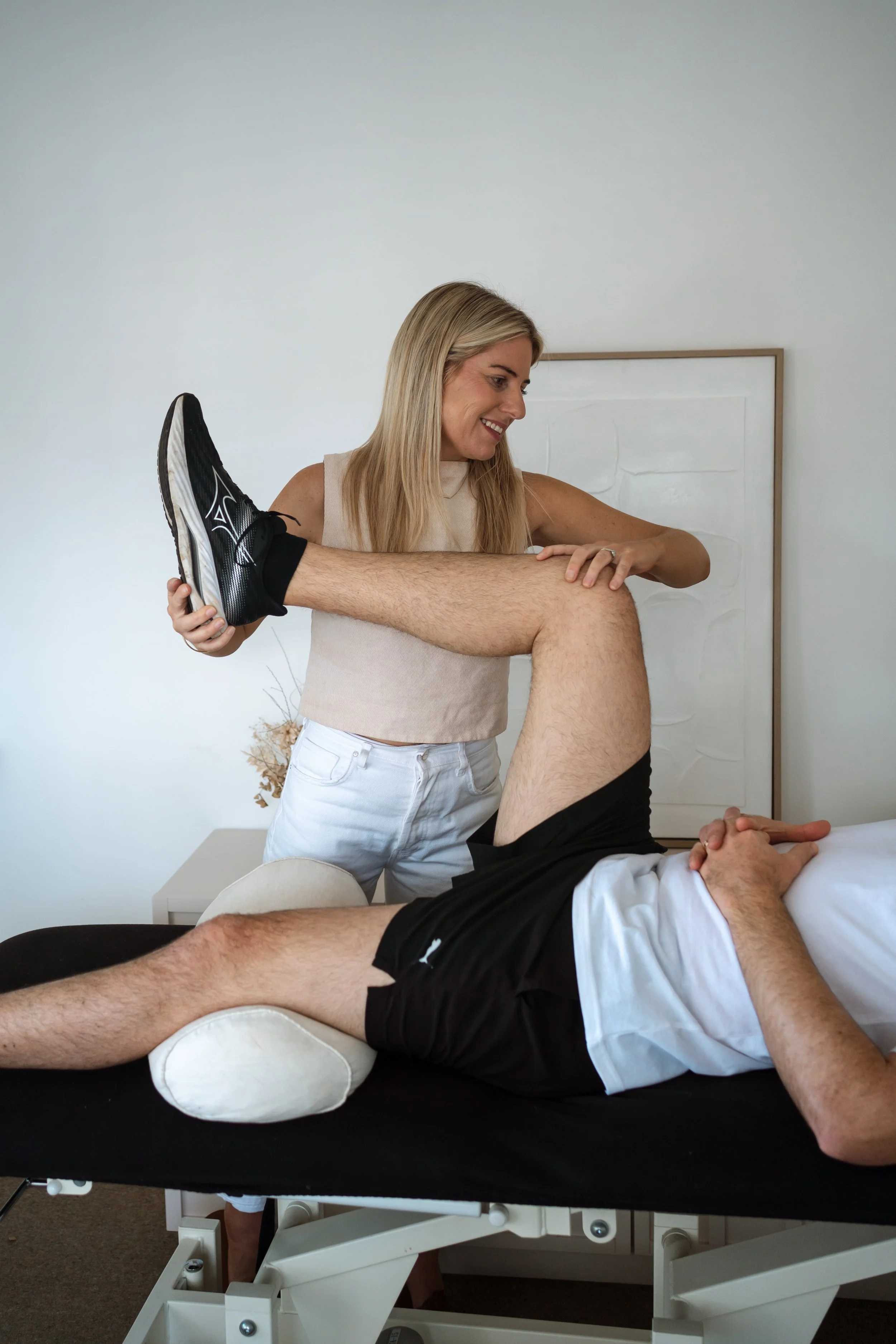
If hip pain is interfering with your everyday activities, osteopathic assessment and treatment may help you understand your symptoms and manage musculoskeletal discomfort. I'm Sarah Boughtwood, a structural osteopath based in Milford on Auckland's North Shore, with over 10 years of clinical experience. I treat adults and children aged five years and older, helping patients manage a wide range of musculoskeletal aches, pains and injuries. My approach is to understand not just where your hip hurts, but how that pain is affecting your everyday life. Perhaps you're struggling to sleep on your side, walk comfortably, get out of the car, put on your shoes or return to exercise. During your appointment, I'll take the time to listen to your symptoms, understand your medical history and assess your hip, pelvis, lower back and surrounding muscles as appropriate.
Depending on your assessment, treatment may include:
Hands-on soft tissue techniques to help manage associated muscle discomfort
Appropriate joint mobilisation where suitable
Individualised strengthening and mobility exercises
Advice on sleeping positions and everyday activities
Guidance on modifying exercise and managing training loads
Practical strategies to help you gradually return to walking, sport and other activities
For many hip conditions, particularly gluteal tendinopathy and hip osteoarthritis, progressive strengthening and appropriate activity management are central parts of treatment. Hands-on treatment may provide short-term relief for some patients, but it doesn't replace exercise-based rehabilitation or reverse structural changes within the hip. My aim is to help you understand your hip pain, improve your movement and feel more confident returning to the activities you enjoy.
Book an Osteopathy Appointment with Sarah
Do I Need an X-ray, Ultrasound or MRI for Hip Pain?
Not everyone with hip pain needs imaging. For many common hip conditions, your symptoms, medical history and physical examination can help guide treatment. However, imaging may be appropriate if you've experienced significant trauma, have persistent or unusual symptoms, or your examination suggests a condition requiring further investigation. As an osteopath, I can assess whether an X-ray, ultrasound or referral to another healthcare professional may be appropriate.
Can I See an Osteopath for Hip Pain Under ACC?
Yes. If your hip pain is related to an injury that qualifies for ACC cover, you may be eligible for subsidised osteopathic treatment. For example, hip injuries following a fall, sporting accident or sudden muscle strain may qualify. Not all hip pain is covered by ACC, particularly when symptoms develop gradually without a qualifying injury. I'm an ACC-registered osteopath, and you don't need a GP referral to book an appointment.
Don't Let Hip Pain Keep You From Doing What You Enjoy
Hip pain can affect so many everyday activities. Perhaps you're struggling to sleep comfortably, walk your usual distance, get out of the car, put on your shoes or return to the gym. It can be frustrating when movements that used to feel easy suddenly become uncomfortable. But having hip pain doesn't automatically mean your joint is seriously damaged or that you need to stop doing the activities you enjoy. With an appropriate assessment and management plan, many hip conditions can improve. If you're experiencing outer hip pain, groin pain, hip stiffness or discomfort when walking, sleeping or exercising, I'd love to help you explore your options.
I'm Sarah, a structural osteopath based in Milford, Auckland, providing individualised care for adults and children aged five years and older.
Let's work towards getting you moving more comfortably and back to doing the things you enjoy.
Book a Hip Pain Appointment with Sarah
Sarah Boughtwood | BAppSc(HB), Master of Osteopathy | ACC Registered Osteopath | Milford, North Shore, Auckland
This article provides general information and doesn't replace individual medical assessment.