Constipation in Pregnancy: Why It Happens & How Osteopathy May Help

Struggling to poop in pregnancy?
Constipation is incredibly common during pregnancy — but that doesn't mean you simply have to put up with it.
As your pregnancy progresses, changes in your hormones, growing baby and changing body can all affect your digestive system. For some women, constipation can become uncomfortable, frustrating and surprisingly disruptive to everyday life.
You may be finding yourself spending longer in the bathroom, straining to pass a bowel movement, feeling bloated or like you haven't completely emptied your bowels.
And when you're already dealing with the physical changes of pregnancy, constipation can add another layer of discomfort.
If constipation is bothering you during pregnancy, an assessment with a pregnancy osteopath may be helpful as part of your overall care.
What causes constipation during pregnancy?
There are several reasons you may experience constipation during pregnancy.
Pregnancy hormones, particularly progesterone, can slow down the movement of food through your digestive system. As your uterus grows, it can also put increasing pressure on the bowel.
Other factors can contribute too, including:
Changes in your usual diet
Not drinking enough fluids
Reduced physical activity
Iron supplements
Changes to your daily routine
Nausea making it harder to eat and drink normally
Pressure from your growing uterus and baby
Changes in the way your abdomen and pelvis move and function
Constipation can happen at any stage of pregnancy, although some women notice it becomes more troublesome as pregnancy progresses.
What does constipation in pregnancy feel like?
Constipation isn't just about how often you go to the toilet.
You may notice:
Hard or dry stools
Difficulty passing a bowel movement
Straining when going to the toilet
Feeling like you haven't completely emptied your bowel
Bloating or abdominal discomfort
Feeling full or uncomfortable after eating
Increased wind
Abdominal or pelvic pressure
You may also find that your symptoms vary from day to day.
How constipation can affect everyday pregnancy
It can be easy to underestimate how much constipation can interfere with your day.
You might find yourself:
Sitting on the toilet for much longer than usual
You may spend a significant amount of time trying to have a bowel movement, particularly when you're already uncomfortable from pregnancy.
Feeling uncomfortable when sitting
Bloating, abdominal pressure and pelvic discomfort can make sitting at your desk, in the car or on the sofa less comfortable.
Struggling to exercise
You may normally enjoy walking, strength training or other exercise, but feel too bloated or uncomfortable to move the way you usually would.
Finding sleep more difficult
A full, bloated or uncomfortable abdomen can make it harder to settle into a comfortable sleeping position.
Feeling uncomfortable while caring for older children
If you're already lifting, carrying, bending down to your children or spending lots of time on the floor, constipation can make you feel even more uncomfortable.
Feeling uncomfortable in pregnancy clothes
Bloating and abdominal pressure can make clothes feel tighter and more restrictive than usual — even when you've gone up a size to accommodate your growing bump.
Feeling generally uncomfortable
Sometimes it's not one particular activity that is difficult. You simply don't feel like yourself because you're bloated, uncomfortable and waiting for your digestive system to cooperate.
Can osteopathy help constipation during pregnancy?
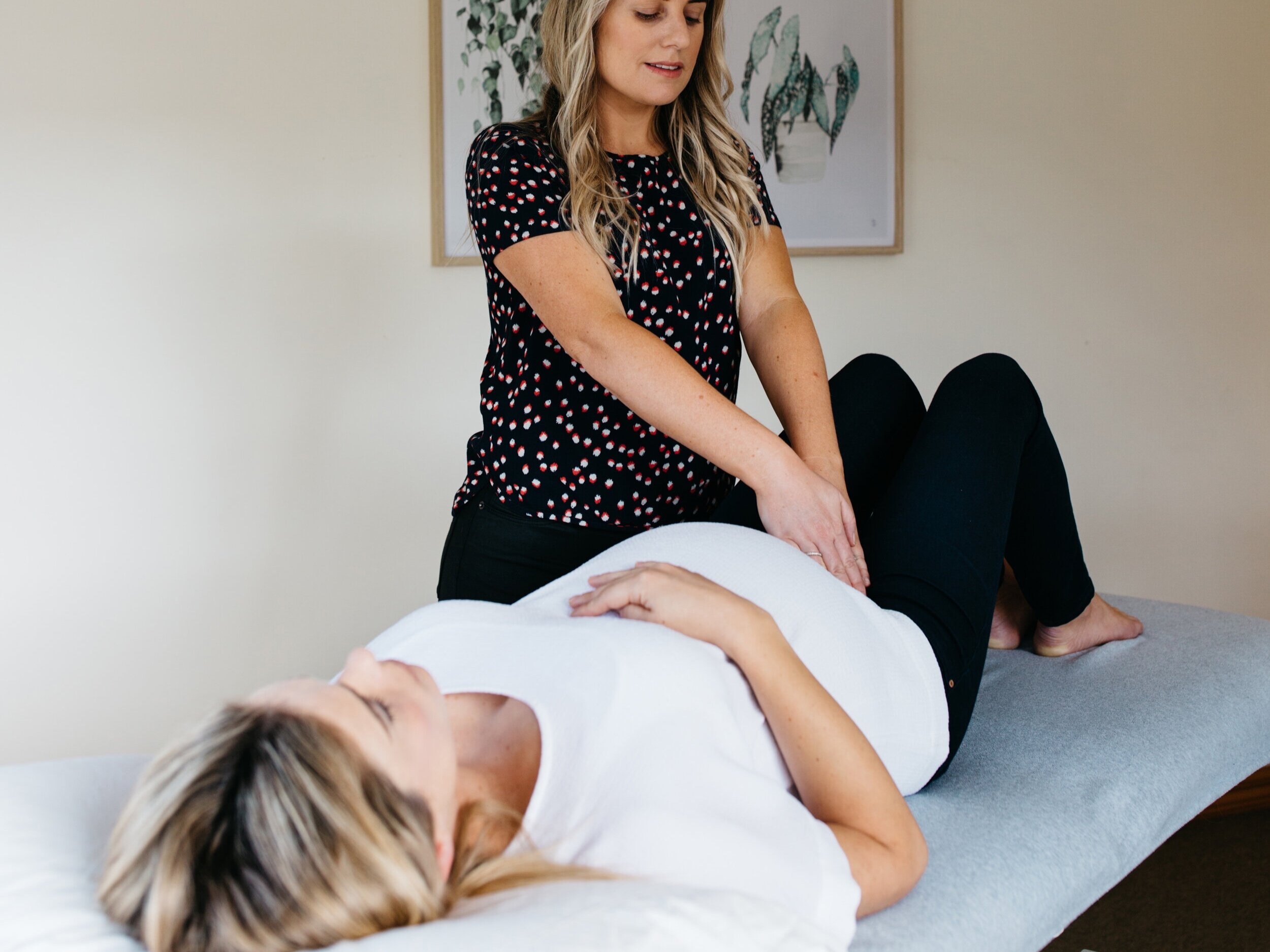
Osteopathic treatment may be able to help with some of the musculoskeletal factors that can contribute to discomfort around the abdomen, pelvis and lower back during pregnancy.
During your appointment, I look at your body as a whole rather than focusing solely on your digestive system.
Pregnancy creates significant changes throughout your body. Your posture, pelvis, spine, ribs, abdominal wall and breathing mechanics all adapt as your baby grows.
I may assess areas such as your:
Lower back
Pelvis
Hips
Abdomen and surrounding tissues
Rib cage
Diaphragm and breathing mechanics
Muscles and joints around your pelvis
Depending on what I find, treatment may include gentle soft tissue techniques, joint mobilisation, articulation, stretching and other appropriate hands-on techniques.
The aim is to help improve comfort and movement and address areas of tension or restriction that may be contributing to how your body feels.
Osteopathy isn't a cure for constipation, and there can be many different reasons for constipation during pregnancy. However, treatment may be a useful part of a broader approach alongside appropriate nutrition, hydration, movement and advice from your midwife or GP.
What can you do at home?
There are some simple things that may help support healthy bowel function during pregnancy.
Keep moving
Walking and other pregnancy-appropriate exercise can help support normal bowel movement.
You don't need to do anything intense — even regular gentle movement throughout the day can be beneficial.
Stay hydrated
Make sure you're drinking enough water throughout the day.
Include fibre in your diet
Fruit, vegetables, wholegrains, legumes and other fibre-rich foods can help support regular bowel movements.
If you're suddenly increasing your fibre intake, do so gradually and make sure you're drinking enough fluid too.
Don't ignore the urge to go
If you need to have a bowel movement, try not to regularly delay it.
Give yourself time
Being rushed or stressed when you're trying to use the toilet can make the experience even more frustrating. Give yourself enough time and try to avoid excessive straining.
Check your supplements
Iron supplements can sometimes contribute to constipation. Don't stop taking prescribed supplements without speaking to your midwife or doctor, but if constipation has started or worsened since taking iron, it's worth discussing with them. There may be different options available.
When should you speak to your midwife or doctor?
Although constipation is common in pregnancy, it's important not to automatically assume every abdominal or pelvic symptom is simply constipation.
Speak with your midwife, GP or other healthcare professional if you have severe or persistent abdominal pain, vomiting, significant abdominal swelling, blood in your stool, unexplained weight loss, or you're concerned about your symptoms.
If you are unsure whether your symptoms are related to constipation, pregnancy or something else, getting appropriate medical advice is important.
You don't have to suffer through pregnancy discomfort
Pregnancy can bring plenty of changes that are expected — but common doesn't always mean you have to simply put up with it.
If constipation is leaving you uncomfortable, bloated or struggling with everyday activities, a pregnancy osteopathic assessment may be worthwhile.
As a mum myself and an osteopath with over 10 years of clinical experience and more than 8 years specialising in pregnancy and postpartum care, I understand that pregnancy isn't just about your bump.
It's about being able to sleep, work, exercise, look after your other children, get in and out of the car and feel comfortable in your own body.
I'll take the time to listen to what's bothering you, assess your body as a whole and tailor treatment to you and your stage of pregnancy.
If you're struggling with constipation or other pregnancy aches and pains, you're welcome to book an appointment with me in Milford, Auckland.
You don't need to wait until you're really uncomfortable before asking for help.
Book your pregnancy osteopathy appointment and let's work on helping you feel more comfortable during your pregnancy.