
Pregnancy Pain Chasing and Caring for Toddlers: Why Does Everything Hurt?
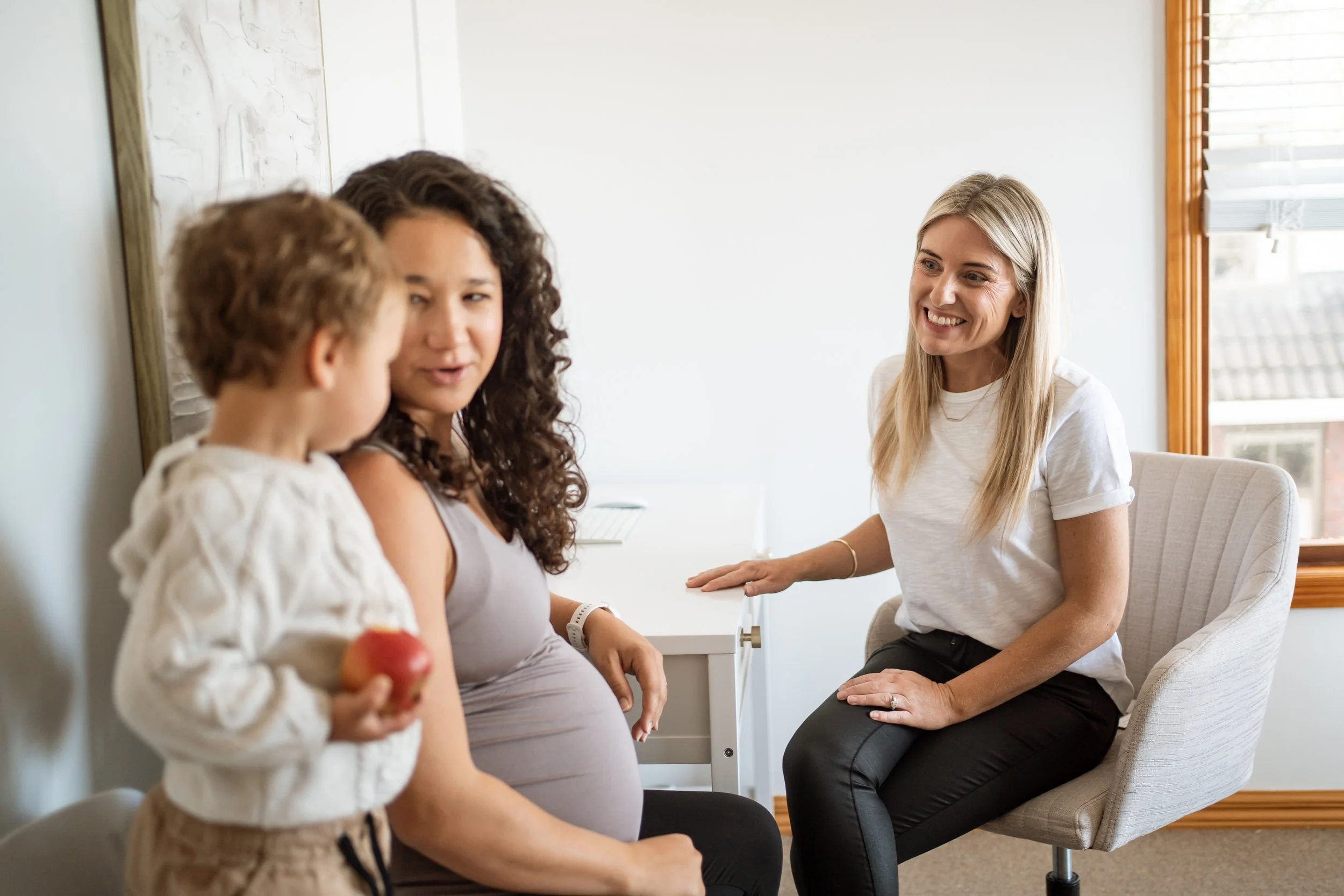
You’re pregnant. And you already know you’re supposed to be taking it a little easier. But you also have a toddler. Which means “taking it easy” isn't always particularly realistic.
There are toys to pick up.
Shoes to put on.
A toddler who suddenly needs to be carried.
A tantrum in the supermarket.
A child who wants to be picked up right now.
A bath to get through.
A car seat to wrestle with.
And apparently, the toddler has decided that walking anywhere is completely optional.
So you keep going.
You bend down.
You lift.
You carry.
You twist.
You chase.
You sit on the floor.
You get back up again.
And somewhere along the way, your body starts saying: “I don't think I can keep doing this.” If you are experiencing pregnancy pain while caring for a toddler, you are certainly not alone. Pregnancy is already placing extra demands on your body. Add the physical reality of looking after a small child, and it is very understandable that your pelvis, back, hips and other areas can start to complain.
“But I can't exactly stop looking after my toddler…”
This is one of the most important things to recognise. When you have a toddler, advice such as “avoid lifting”, “rest more” or “don't bend down” can be incredibly frustrating. Because how? Your toddler still needs you. They need help getting dressed. They need to be lifted into the car seat. They want cuddles. They fall over. They need their nappy changed. They want to be carried when they're tired. And sometimes you have no choice but to pick them up. So rather than expecting you to completely avoid these movements, the goal is often to help you find ways of caring for your toddler that place less strain on your body.
What can hurt when you're chasing after a toddler while pregnant?
It can be surprisingly widespread.
Pelvic pain and pubic bone pain
The pelvis can take a lot of load when you're repeatedly lifting, carrying, bending and moving quickly.
You may notice pain around the pubic bone or front of the pelvis, particularly when:
getting up from the floor
stepping sideways
climbing stairs
getting dressed
lifting your toddler
getting in and out of the car
turning in bed
This can occur with pelvic girdle pain (PGP) or SPD during pregnancy.
SIJ and buttock pain
You may feel pain at the back of your pelvis, sometimes more on one side. The sacroiliac joints (SIJs) and surrounding muscles can become uncomfortable when you're constantly transferring your weight from one leg to another or carrying your toddler on one hip. And let's be honest — the one-hip carry is incredibly tempting. It's also something worth paying attention to if it repeatedly aggravates your pain.
Lower back pain
Pregnancy back pain can become particularly noticeable when you are constantly bending over a toddler.
Think about how many times a day you:
pick up toys
lift your child
bend over a cot
put shoes on
help with clothes
lift a child into a highchair
pick something up from the floor
It's a lot of repetitive loading.
Hip pain
Your hips can also become sore from carrying a toddler, particularly if you tend to stand with your weight shifted onto one side. You might notice hip pain during pregnancy when walking, climbing stairs, getting up from the floor or lying down at night.
Groin and inner thigh pain
Lifting and carrying can place extra demand on the muscles around your pelvis and inner thighs. You may notice pulling or aching through the groin, particularly when your legs are moving apart or you're trying to stabilise yourself while carrying your child.
Thighs and knees
Your legs are doing plenty of work too. Repeatedly getting down to toddler height and back up again can put additional demands on your thighs and knees. If your pelvis or hips are uncomfortable, you may also start moving differently without realising it, which can change how your knees and legs are loaded.
Calves, ankles and feet
Chasing a toddler rarely involves a leisurely, predictable walk. It's stopping, starting, turning, squatting, carrying and suddenly running because your toddler has decided to head towards the road. Your feet, ankles and calves are absorbing all of those changes while also carrying your changing pregnancy weight.
Ribs and upper back
Holding a toddler against your body can put quite a lot of strain through your upper back and ribs. As pregnancy progresses, your ribcage is already adapting to your growing baby. Add a small person who wants to be carried, and rib pain in pregnancy or upper-back discomfort can become much more noticeable.
Neck and shoulders
And then there's the classic: Toddler on one hip + bag on the other shoulder + phone in one hand. Your neck and shoulders may not thank you. Carrying, feeding, lifting and looking down at your toddler can all contribute to neck and shoulder tension during pregnancy.
Why does caring for a toddler hurt more during pregnancy?
It's not because you're doing something wrong. You're asking your body to do two physically demanding jobs at the same time. Pregnancy changes your centre of gravity, your posture and the way you distribute load through your pelvis and spine.
At the same time, toddler care involves a huge amount of:
lifting + carrying + bending + twisting + kneeling + getting up and down + walking + sudden movements.
And you rarely get to choose when those movements happen. Your toddler isn't going to wait until your pelvis is feeling perfectly balanced before announcing that they need to be carried.
What can I do without putting my toddler down and walking away?
There are some surprisingly simple changes that can help.
Get your toddler to you when you can
Rather than repeatedly bending down to pick your child up from the floor, encourage them to climb onto a chair, sofa or another safe surface where appropriate. The less often you need to bend all the way down, the better.
Avoid carrying on one hip for long periods
If carrying your toddler is comfortable and necessary, try to keep them closer to the centre of your body rather than always resting them on one hip. If you have pelvic pain, alternating sides may not always solve the problem — sometimes reducing the amount of one-sided carrying is more useful.
Bend your knees when lifting
When you need to lift your toddler, try to bring them close to you before standing rather than lifting them with your arms stretched away from your body. You don't need to perform a perfect squat every time you pick up a toy.
Think:
close to you → steady yourself → lift.
Let your toddler walk when they can
Yes, they may be slower. Yes, you may hear “carry me!” But if walking is comfortable for you and your child is able, allowing them to walk some of the time can reduce the amount of lifting and carrying your body has to do.
Change positions throughout the day
Your body may tolerate ten minutes of sitting on the floor very differently from an hour of sitting on the floor. Move regularly. Stand up. Walk around. Change the way you're playing with your toddler. And don't wait until you're already very sore.
Is this normal?
Pregnancy aches and pains are common, particularly when you're also caring for a toddler. But common doesn't mean you should have to struggle through it.
If you are finding that:
picking up your toddler hurts
walking hurts
getting up from the floor is painful
stairs are becoming difficult
getting in and out of the car hurts
you can't comfortably carry your child
your pain is affecting your sleep
you're changing how you care for your toddler because of pain
then it's worth getting assessed. You don't have to wait until you physically can't keep up.
What if I need to keep lifting my toddler?
This is where an individual assessment can be particularly helpful. Rather than simply saying “don't lift”, an osteopath can look at how your body is coping with the movements you actually have to do. We can consider your pelvis, hips, lower back, spine, ribs and the muscles around these areas, as well as how you're moving when you lift, carry, bend and walk. Osteopathic treatment during pregnancy can include soft tissue techniques, gentle joint mobilisation or articulation, stretching and manipulation where appropriate. Treatment is adapted to your pregnancy and your symptoms. The aim is to help your body cope better with the demands being placed on it — while also giving you practical strategies that fit into real family life. Because telling a pregnant mum with a toddler to “just rest” isn't always particularly helpful. Sometimes you need someone to understand what your day actually looks like.
And yes, you are allowed to look after yourself too
There can be a strange guilt around needing help when you're pregnant and already have a child.
You might think:
“Other mums manage.”
“It's probably just pregnancy.”
“I don't have time to deal with my back.”
“I'll wait until the baby is born.”
But your body is doing a huge amount of work already. Looking after your toddler doesn't mean you have to ignore your own pain. And getting support doesn't mean you're not coping. It means you're looking after yourself while you continue looking after everyone else.
Pregnancy osteopathy in Milford, Auckland
If you're pregnant and finding that chasing, lifting or caring for your toddler is becoming painful, I can help you work out what is contributing to your symptoms and what may make everyday life easier. I see pregnant women with pelvic pain, SPD/PGP, SIJ pain, hip pain, lower back pain, groin pain, rib pain and other pregnancy-related aches and pains.You don't need to wait until your toddler suddenly seems incredibly heavy — or until you're counting down the days until the baby arrives — before asking for help.
Book an appointment with Sarah Boughtwood Osteopath in Milford, Auckland, and let's find ways to make looking after your little one more comfortable.