
Pregnancy Pain When Getting Dressed: When Getting Dressed Becomes Surprisingly Difficult
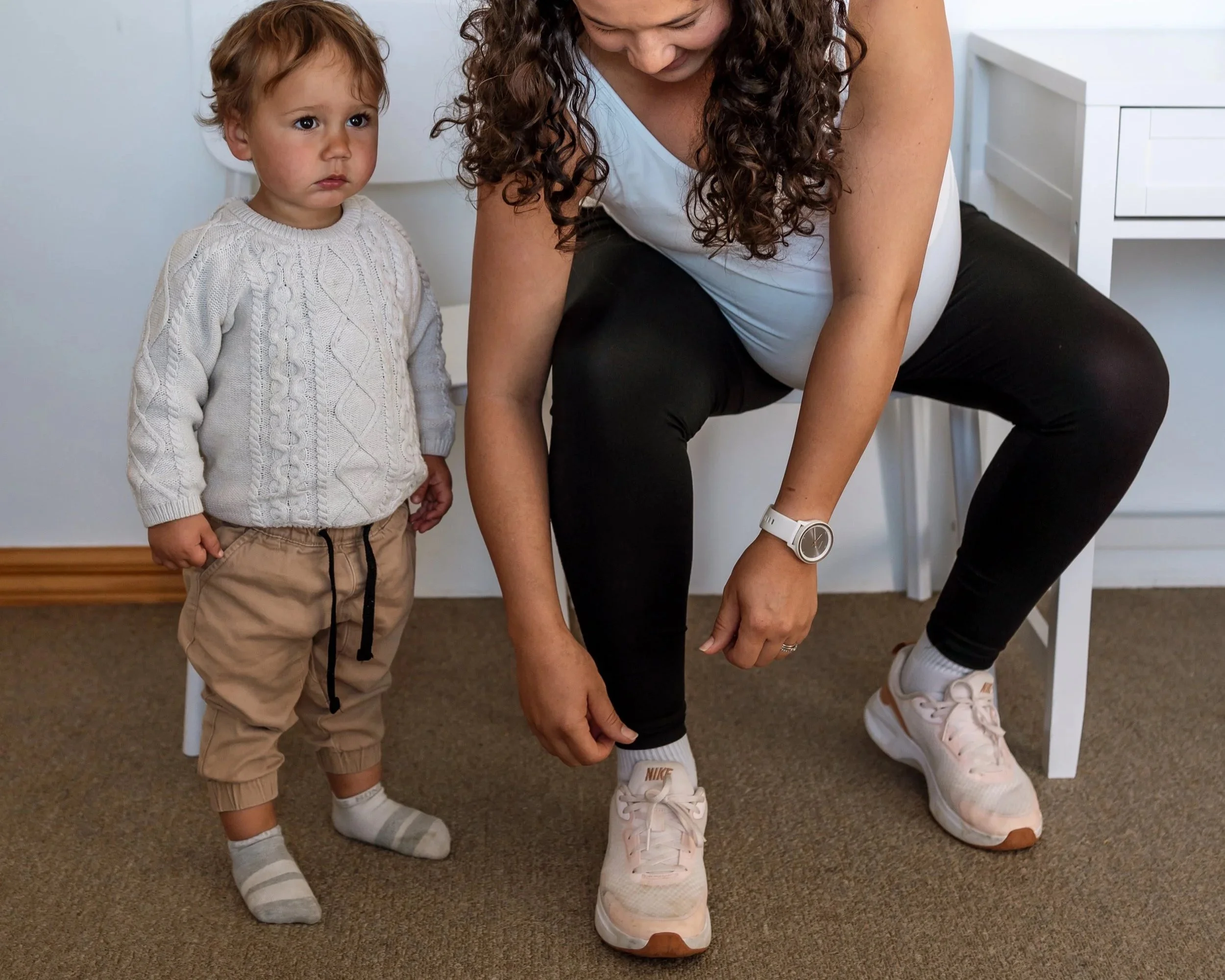
Getting dressed during pregnancy sounds like such a simple part of the day.
Until suddenly, it isn't.
You might find yourself standing on one leg to put your pants on and wondering how you're supposed to do that without losing your balance. Pulling on your socks might be surprisingly painful. Getting your shoes on may involve twisting, reaching and holding your breath. Or perhaps lifting one leg to put your underwear or pants on has become uncomfortable around your pelvis, hips or lower back.
And if getting dressed has become painful during pregnancy, you're certainly not alone.
Pregnancy can bring a lot of changes to your body, and some aches and pains are common. But common doesn't mean you simply have to put up with them.
Why can getting dressed become painful during pregnancy?
As your pregnancy progresses, your growing baby and changing body can place different demands on your muscles, joints and pelvis.
Your centre of gravity changes, your abdominal muscles and pelvic floor are adapting, and the way you move can naturally change as your pregnancy progresses.
At the same time, everyday movements that previously required very little thought can become surprisingly challenging.
Getting dressed often involves:
Standing on one leg
Lifting one leg at a time
Bending forwards
Twisting your body
Moving your hips apart
Putting weight through one leg
Reaching down towards your feet
Getting in and out of different positions
If you are experiencing pelvic pain, hip pain, lower back pain, sacroiliac joint (SIJ) pain or pelvic girdle pain (PGP), these movements can become particularly uncomfortable.
For some women, symptoms may be associated with SPD (symphysis pubis dysfunction) or pelvic girdle pain during pregnancy.
"I just want to get dressed without it hurting."
This is something I hear from pregnant women quite regularly.
It isn't necessarily the big things that become the most frustrating.
It's the little everyday tasks.
Putting your pants on.
Getting your socks over your feet.
Pulling on your shoes.
Getting dressed for work.
Getting ready to leave the house.
Changing clothes at the end of the day.
When you're already tired, uncomfortable and carrying a growing baby, having to think about how you're going to get dressed can feel like one more thing to manage.
And you shouldn't feel like you're being dramatic for finding it difficult.
If getting dressed hurts, that's worth paying attention to.
Pregnancy pain when lifting one leg
One of the most common difficulties pregnant women describe is pain when lifting one leg.
You might notice pain when:
Putting your underwear or pants on
Stepping into trousers
Putting on socks
Putting shoes on
Getting into the bath or shower
Getting into or out of the car
Climbing stairs
Turning over in bed
You may feel discomfort around the pubic bone, pelvis, groin, hip, buttock or lower back.
Sometimes it is worse on one side. Sometimes it feels like pulling, aching, pressure or sharp pain.
Every pregnancy is different, and the location and type of pain can vary considerably from person to person.
That's why I don't believe in treating pregnancy pain as though there is a single solution that works for everyone.
Could it be pelvic girdle pain or SPD?
If getting dressed is particularly painful when moving one leg at a time or separating your legs, your symptoms may be related to pelvic girdle pain (PGP).
You may also hear the term SPD, referring to pain around the pubic symphysis at the front of the pelvis.
Other symptoms can include pain when:
Walking
Getting in and out of the car
Turning over in bed
Going up and down stairs
Getting dressed
Standing on one leg
Getting in and out of bed
Putting weight through one leg
You don't need to wait until your pain is severe before seeking help.
Getting support earlier can make everyday movements more manageable and help you understand what your body is asking of you.
How can osteopathy help pregnancy pain?
As an osteopath, I look at your whole body, rather than simply focusing on the area that hurts.
During your appointment, we'll talk about what you're experiencing, when your symptoms started and which movements or activities are making things difficult.
I'll assess how your body is moving and how different areas may be contributing to your symptoms.
Depending on what I find and what is appropriate for you and your stage of pregnancy, treatment may include techniques such as:
Soft tissue treatment
Joint mobilisation and articulation
Gentle joint manipulation where appropriate
Muscle stretching
Advice around movement and positioning
Exercises and strategies to help you manage everyday activities
The aim isn't simply to make you feel better while you're lying on the treatment table.
I want to help you move more comfortably in your real life.
That might mean being able to put your pants on without pain, get your shoes on more easily, walk to the car, sleep more comfortably or simply get through your day with less discomfort.
You don't have to stop moving
If you've developed pregnancy pain, it can be tempting to avoid the movements that hurt.
Sometimes modifying an activity is sensible. But avoiding movement altogether isn't always the answer.
I can help you work out what movements are currently comfortable, what might need modifying and how you can continue doing the things that are important to you.
This can be particularly helpful if you're wanting to stay active during pregnancy, continue exercising or prepare your body for birth.
Your treatment and advice can also change as your pregnancy progresses because your body and your needs are continually changing.
A few simple tips for getting dressed with pregnancy pain
If getting dressed is uncomfortable, try making the movement a little easier rather than forcing through the pain.
Sit down where you can.
Putting on underwear, pants, socks and shoes while sitting can reduce the amount of weight you need to put through one leg.
Avoid balancing on one leg.
If lifting one leg is painful, use a chair or sit on the edge of the bed.
Keep your knees together when getting dressed if separating your legs is uncomfortable.
This can be particularly useful if you're experiencing pelvic girdle pain or SPD symptoms.
Take your time.
Pregnancy isn't the time to rush through every movement. Slow, controlled movements can be more comfortable.
Listen to your body.
Pain that repeatedly occurs with everyday movements is worth discussing with your healthcare professional.
And remember — you don't need to wait until you're struggling to walk before asking for help.
You deserve to be comfortable during pregnancy
Pregnancy comes with plenty of changes, and yes, some aches and pains can be part of the experience.
But that doesn't mean you should simply accept being uncomfortable all day.
If you're finding yourself thinking:
"Why does putting my pants on hurt?"
"Why can't I lift my leg without my pelvis hurting?"
"Why is getting my shoes on suddenly so difficult?"
"Is this normal pregnancy pain?"
— you're not alone.
These are real problems that can have a real impact on your day.
As a pregnancy osteopath in Milford, Auckland, I work with pregnant women experiencing pelvic pain, hip pain, lower back pain, SIJ pain, pelvic girdle pain and other pregnancy aches and pains.
We'll look at what's happening for you, rather than assuming every pregnancy is the same.
You don't have to just put up with pain because you're pregnant.
If getting dressed, walking, sleeping, working or simply getting through your day has become harder because of pregnancy pain, I'd be happy to help.
Book an appointment with Sarah Boughtwood Osteopath in Milford, Auckland.